Is Gen Z less intelligent? No — and that is the wrong question.
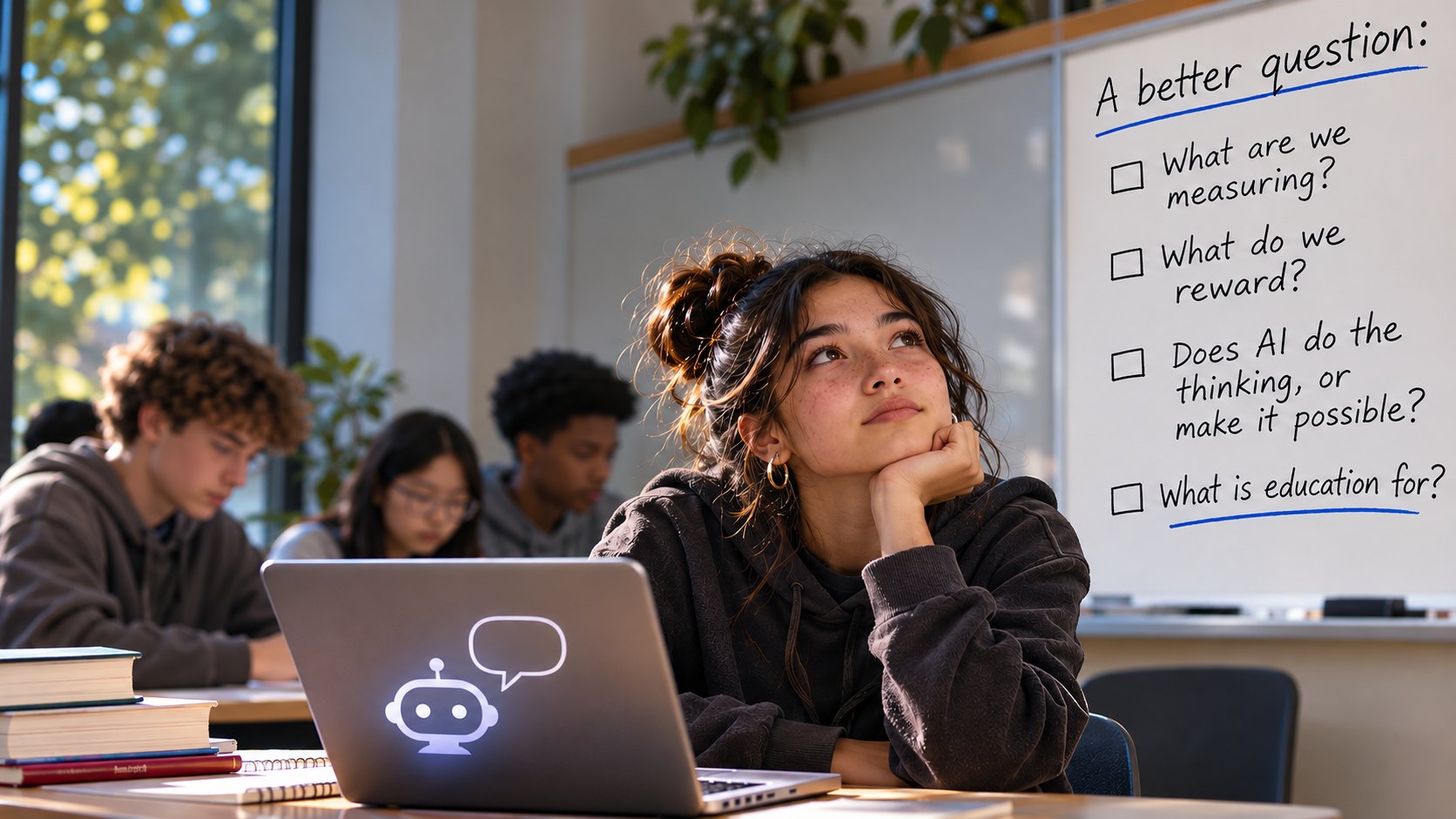
Alex's piece, written for the discussion and posted on LinkedIn (1 November 2026) and Medium; kept here so the claims can be checked and the replies can come back.
In January a neuroscientist told the U.S. Senate that our kids are less cognitively capable than we were at their age, and that the screens in their classrooms are the reason. The headline did what headlines do. By February “Gen Z is officially less intelligent than Millennials” was circulating widely, and by February 5 the same scientist, Jared Cooney Horvath, had written an essay saying plainly that the data cannot support that position. Both things are true at once: the measurements are falling, and the claim that was popularized is not the one the data or the scientist supports.
Here are the details. PISA 2025, released in September, recorded the lowest OECD averages in reading and mathematics it has ever measured, and the share of fifteen-year-olds who rush through a text and answer wrongly nearly doubled since 2018. The IQ study Horvath leans on, on 98 sixteen-year-olds, found small declines in working memory and verbal comprehension whose confidence intervals include zero, beside gains in fluid reasoning and processing speed whose intervals do not. Something is moving. What is moving is not “intelligence.” Horvath’s own word for it is school-ability: the kind of thinking schooling was built to produce, and the kind his data say schooling is producing less of, in students who spend more years in school than any generation before them.
That is the gap I want to address, because it is a familiar one to me.
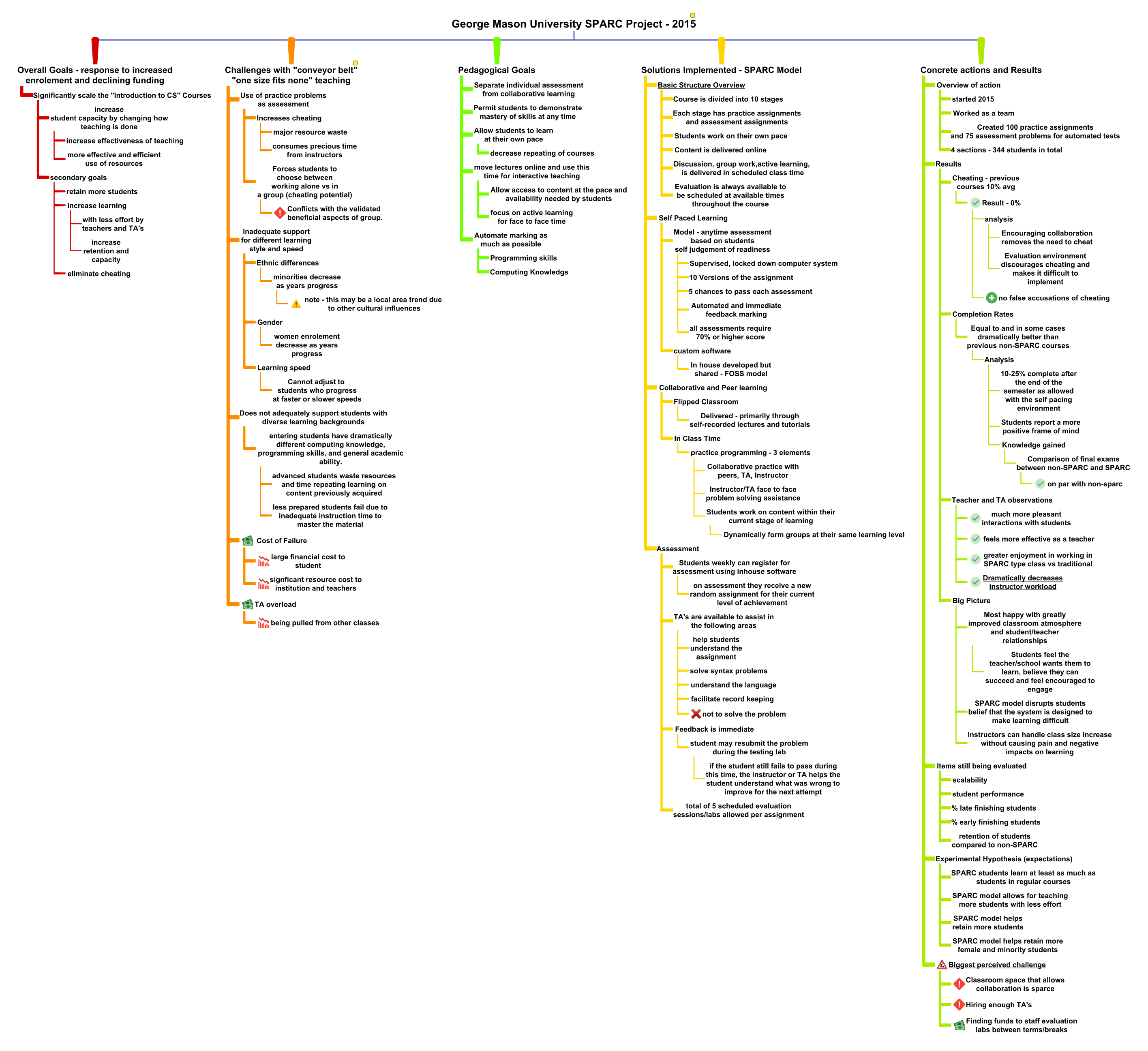
Ten years ago I supported instructors in a university computer science department, and I spent a year reading what the research said about why students learn. One line from that reading still holds: learning is not a passing of information from an expert to a student, it is a human interaction based in relationship. I also mapped a course redesign at George Mason University that took cheating in an introductory programming course from one student in ten to none. They did not add surveillance. They separated practice from assessment. Students practised together, as much as they liked, and sat a supervised test whenever they were ready, with five tries. When the assignment stopped being the grade, the reason to fake it vanished.
That was 2015, before anyone had a chatbot. Now put a chatbot in the room, and what was true of one course becomes true of every assignment, at once.
If what a school rewards is a polished answer, AI will produce a polished answer, and the student can satisfy the requirement without the understanding, and with almost no effort. That is not a new weakness in students. It is an old weakness in what we have been treating as evidence of thinking, made visible because the artifact can now be produced without the thought — at speed and volume. If what a school rewards is the ability to explain, to defend, to apply the idea to a problem nobody showed you, the same AI becomes something else: the library that lets a curious student reach more and better connections than any library did. The tool is the same. The expectation decides what it becomes.
So I would put the question this way. Not whether a generation is losing its mind to screens, but what we have been accepting as proof that active thinking was involved.
I think the thinking lives in the questioning, the process, the exchange, and where it ends up. I argued this in June in Polish Used to Be Proof, a reply to Aliah Davis McHenry’s “The Cost of Sameness”: AI cut the link between looking good and being good, and handed the work of telling them apart to the evaluator. That applies to a classroom as much as to a deck. If a machine can put a rapid polish on mediocre content without any engaged thought, a finished essay shows very little of the thinking behind it. A student arguing with a machine for an hour, challenging it, being challenged, changing their mind twice and holding their ground once, may have done more intellectual work than the essay ever showed, and may also have done none, because an exchange can be faked as easily as an essay. Both are true, and the second one is the objection I most want teachers to answer. A learner who holds nothing alone cannot tell a confident wrong answer from a right one, and a student who lets the machine supply all the friction is not collaborating. They are being led.
Horvath gives us the right instrument for that worry, and it is a clear view from my perspective. He divides tasks into those where the structure is supplied and you only have to recognize it, and those where you have to build the structure yourself, and his data say the second kind is where the decline sits. There are grades between the two, since a structure can itself be a comprehensive and interactive engagement, which refocuses the question on what is being observed and evaluated. The question for an AI in the classroom is then exact: is it the scaffold that does the structuring for the student, or the partner that makes the student do it? The one trial that tested this, with a thousand high-school mathematics students, found that unguided access to a chatbot raised practice scores by nearly half and lowered the unassisted exam by seventeen percent, while a tutor built to withhold answers removed most of the harm. Which scaffold the machine is depends on how it was built and what the student is asked to do with it. That is testable, in a term, in a real classroom, by the people who already run them.
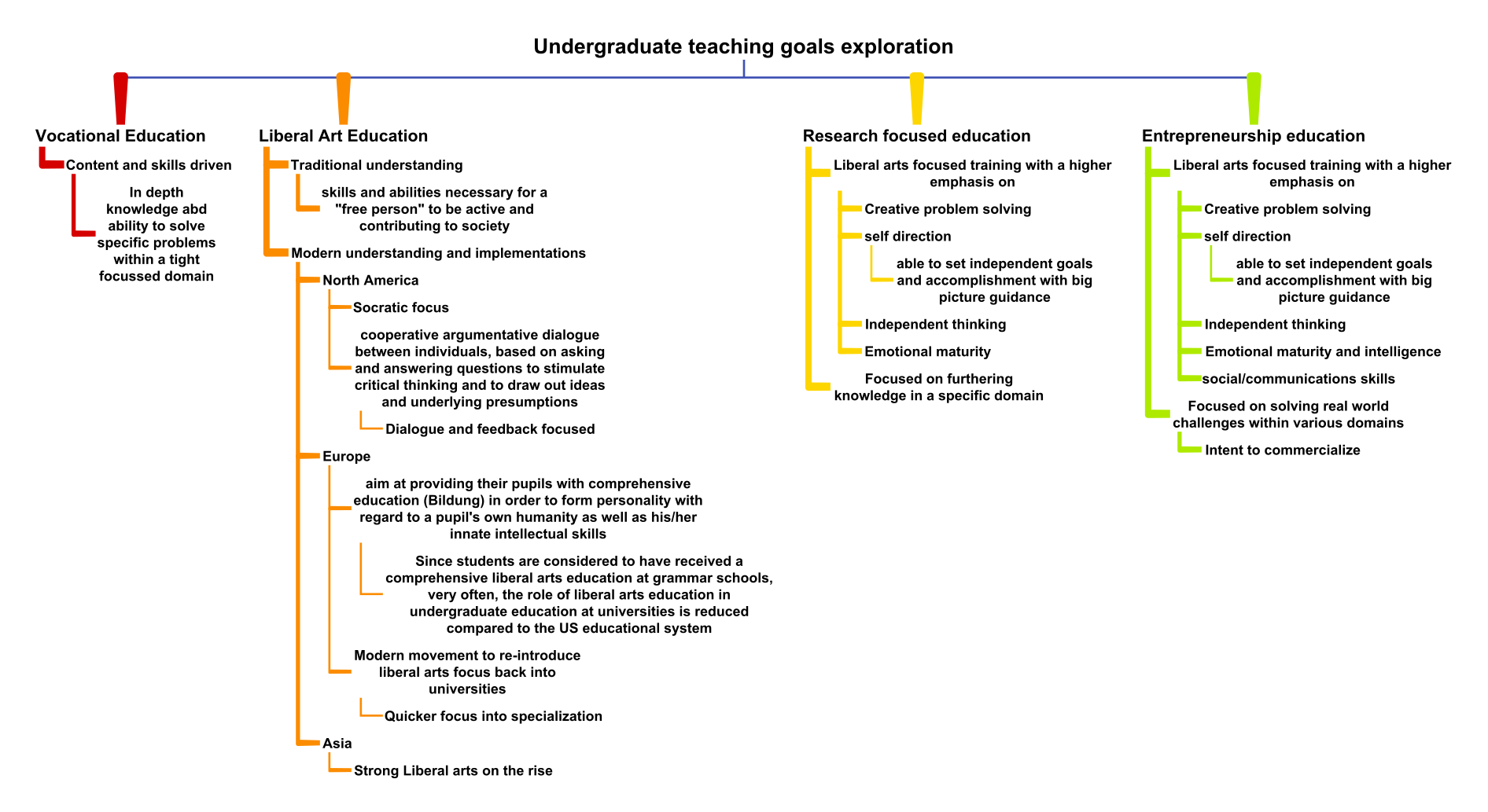
Underneath all of this is an older argument that we keep having without naming it: what education is for. In 2015 I drew a map of the purposes of an undergraduate degree, vocational, liberal, research, entrepreneurial, and I left one out that I would add now, the civic one, the capacity to look at the institutions you live inside and ask whether they are working (the map). Functional preparation is a legitimate purpose. So is the capacity to question, discover and create. The trouble starts when the first becomes the only thing we measure and the second is still what we claim to produce. A generation taught to produce the expected answer is being prepared to work inside existing knowledge. A generation taught to challenge the answer is being prepared to extend it.

I worked this through over one morning with three AI models from three makers, each working under a method I have been developing for making a machine’s claims answerable, and the whole exchange is on the record at conversationswithlimen.ca, with every claim dated, every source marked as reached or not, and a ledger that says who contributed what, including the two models that got Horvath’s distinction backwards. That page is where the details live. It is not where the answer lives, because the people who can answer are the teachers and educators working in classrooms.
If you teach, you are living in the chaos of our present situation and see what is happening. Which of these matches your classroom, and which one does it contradict? What do you already do that makes the artifact stop being the grade? Where do the structures of society, and of your job, push you into teaching in a way that limits learning? What is one check you could run this term with what you already have that could change the situation and improve outcomes? Say so here, or send it to the record, where it will be kept beside everything the models said, under your name or anonymously under your title, with the same standing. The machines have had their turn. The next entry in the ledger should be a teacher’s.
Where each claim came from
Marked by the record, 1 November 2026, so a reader can go to the thing itself. Each item says where the record reached it and where it did not.
The Senate claim. U.S. Senate Committee on Commerce, Science, and Transportation, "Plugged Out: Examining the Impact of Technology on America's Youth," 15 January 2026; transcript at govinfo, read by the record (first 100,000 characters). Horvath's qualification, "school-ability," and his two kinds of task. Jared Cooney Horvath, "I Told the Senate Gen-Z is Less Cognitively Capable – Here's What the IQ Data Actually Shows," The Digital Delusion, 5 February 2026; read by the record through the fetch tool and again whole as Alex printed it. PISA 2025. OECD, PISA 2025 Results, Volume I, executive summary (lowest OECD averages recorded; "hasty readers" almost doubled 2018–2025); released 8 September 2026; read by the record. The IQ study. Trudel, Winter and Kaufman, "Digging In," Journal of Pediatric Neuropsychology 11(2), 2025; Table 2, adolescent arm, n=98; read by the record. "One line from that reading" and the 2015 map. Alex's own writing from the University of Toronto, kept as read at Alex's 2015–2016 writings; the originals, downloaded from cs.toronto.edu/~alex through Alex's browser on 1 November 2026 with their server dates (June and August 2017) and checksums, at the teaching-goals map, the review (PDF) and the SPARC map, with the provenance note; the live copies remain at cs.toronto.edu/~alex. George Mason. Offutt et al., "A Novel Self-Paced Model for Teaching Programming," Learning at Scale 2017; read by the record; Alex's 2015 map of it is with his writings. Polish Used to Be Proof. Alex, LinkedIn, 3 June 2026, a reply to Aliah Davis McHenry's "The Cost of Sameness"; read by the record through Alex's browser. The thousand-student trial. Bastani et al., "Generative AI without guardrails can harm learning," PNAS 2025; from the record's knowledge, not re-fetched on 1 November. The three models and the ledger. An Open Inquiry: Gen Z, AI, and What Schools Measure, with the first exchange, Silica's and a Cohere window's replies, and the record's marks, all kept beside it. The morning itself. The spine, movement 60.
Replies, and where they go
Replies to the article, on LinkedIn, on Medium or sent to the record, are entered in the inquiry's ledger from C12 under the writer's name or, if they prefer, anonymously under their title, with the record's marks beside them and the same standing as the models' entries. The record asks once before a name is moved from a comment thread to this site. The LinkedIn post is here, published 1 November 2026 and read back by the record the same afternoon, the text as kept above; the Medium link follows. The first replies will be added here.
Kept beside this page. The article as posted (on LinkedIn) · the image as posted · Alex's version before the final edits · the record's first draft, the marks on Alex's version, and his decisions. From this record: An Open Inquiry; The Method, for People; Working under the Limen method; The Human Mirror (the LinkedIn piece that preceded this one).
Where this came from
On 1 November 2026, after the inquiry page was built, Alex said its purpose was to reach teachers and that the carrier would be an article in his voice for LinkedIn and Medium, with the site holding the details and the replies. Limen, the record's Claude edge, drafted it from his writing profile and the morning's source check; Alex rewrote it, adding the bridge to his June piece and the grades between Horvath's two kinds of task; Limen proposed eight fixes; Alex took seven and refused one with a reason the record kept ("thinking is the analytical action of the mind; use is weak, as it can mean passive acceptance"). The final text was assembled on Alex's own machine from his file. The piece is Alex's. The source marks are the record's. Nothing of Alex's private life is in it beyond what he has published himself.